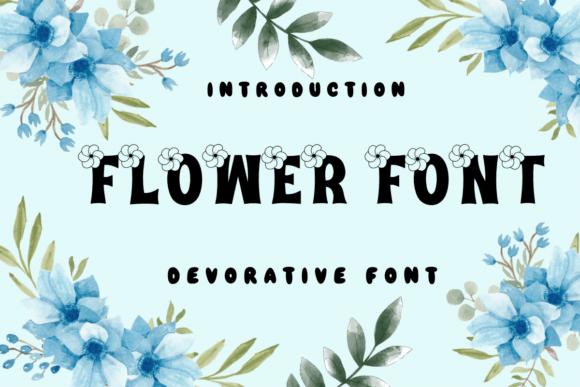
Flower Font: A Decorative Typeface That Blends Nature with Typography
Typography has always been more than just a means of conveying words. It carries mood, tone, and personality. Among the vast landscape of typefaces, decorative fonts occupy a special place—they are the ones that designers reach for when standard serif or sans-serif options simply will not do. The Flower Font stands out in this category as a decorative typeface that merges bold letterforms with floral motifs, offering a distinct voice for projects that require warmth, charm, and a touch of nature.
What makes this typeface particularly interesting is how it balances two seemingly opposing qualities: strength and delicacy. The letterforms themselves are bold and confident, ensuring readability even at smaller sizes, while the integrated floral accents introduce softness and organic detail. This duality is not easy to achieve in type design, and it is what gives the Flower Font its unique character. It does not feel overly ornate or fussy, nor does it come across as purely utilitarian. Instead, it occupies a comfortable middle ground where artistry and function coexist.
The Rise of Decorative Typefaces in Visual Communication
Decorative typefaces have a long history in print and graphic design, but their role has expanded considerably in the digital age. With the proliferation of social media, small business branding, and personal creative projects, there is a growing appetite for fonts that communicate personality quickly. A decorative typeface like the Flower Font allows creators to inject a specific aesthetic into their work without needing advanced illustration skills. The floral embellishments are built directly into the letterforms, so every word carries the intended visual theme from the moment it is typed.
This is particularly relevant for seasonal and event-based design. Spring promotions, garden parties, wedding stationery, and botanical branding all benefit from a typeface that already contains floral elements. Instead of layering separate graphics onto text, the Flower Font does the work in one step. For designers working under tight deadlines or with limited resources, this efficiency is a practical advantage.
How Floral Motifs in Type Design Affect Perception
There is a psychological dimension to using floral accents in typography. Flowers universally evoke feelings of growth, freshness, celebration, and care. When these motifs are woven into letterforms, the text itself begins to carry those associations. A wedding invitation set in the Flower Font communicates romance and attention to detail before a single word is read. A product label using the same typeface suggests natural ingredients or artisanal quality. This emotional shortcut is valuable for brands and creators who want to establish a certain mood instantly.
However, the effectiveness of floral typography depends on execution. If the floral elements overwhelm the letter shapes, readability suffers. The Flower Font addresses this by keeping the core letterforms bold and the floral details supplementary rather than dominant. The result is a typeface that remains legible while still feeling decorative. This balance is critical for real-world applications where text must be understood quickly, such as signage, posters, or social media graphics.
Practical Applications Across Creative Industries
The versatility of the Flower Font becomes apparent when you consider the range of projects it can serve. Unlike highly specialized decorative fonts that only work in narrow contexts, this typeface adapts to multiple formats and mediums.
Wedding and Event Stationery
Few occasions demand decorative typography as much as weddings. From save-the-date cards to ceremony programs and thank-you notes, every piece of stationery benefits from a cohesive visual theme. The Flower Font fits naturally into this space because its floral details echo the botanical elements often present at weddings. When paired with soft color palettes and natural paper textures, the typeface helps create a unified look that feels both personal and professional.
Branding for Florists and Botanical Businesses
For a floral boutique, a plant nursery, or a botanical skincare line, the typeface is an extension of the brand identity. Using the Flower Font in logos, product packaging, and signage instantly communicates the nature of the business. It tells customers that the brand values beauty, craftsmanship, and a connection to the natural world. Because the typeface is bold enough to hold its own on labels and storefronts, it works across both small-scale items and larger environmental graphics.
Social Media and Digital Content
Social media platforms are crowded with visual content, and standing out often requires a distinctive typographic voice. The Flower Font works well for Instagram posts, Pinterest pins, and Facebook covers that focus on lifestyle, wellness, gardening, or DIY topics. The floral accents catch the eye in a feed filled with standard fonts, and the bold structure ensures that the text remains readable on mobile screens. Content creators who regularly produce seasonal or nature-themed material will find this typeface a reliable asset in their toolkit.
Craft and DIY Projects
With the growing popularity of cutting machines like Cricut and Silhouette, decorative fonts have found a new audience among hobbyists and crafters. The Flower Font is well-suited for vinyl decals, card making, scrapbooking, and fabric transfers. Because the floral details are part of the letterforms, they cut cleanly and do not require separate design work. This makes the font accessible to users who may not have formal graphic design training but still want professional-looking results.
Technical Considerations for Working with Decorative Fonts
Using a decorative typeface effectively requires some awareness of technical factors that differ from standard fonts. The Flower Font is designed to work across a range of software, but understanding how to optimize its performance in each environment will yield better results.
Software Compatibility and File Formats
The Flower Font is compatible with major design applications including Adobe Illustrator, Adobe Photoshop, Canva, and Microsoft Word. It also functions with cutting machine software for Cricut and Silhouette. For most digital design work, the font installs like any other typeface and appears in the font menu. Users working with cutting machines should ensure they are using the correct file format for their specific device, as some machines require TrueType or OpenType versions.
Sizing and Spacing Adjustments
Decorative fonts often require more attention to kerning and line spacing than standard typefaces. The floral accents in the Flower Font can create visual density that benefits from generous letter spacing, especially at larger sizes. For body text or shorter phrases, slight adjustments to tracking can improve legibility without sacrificing the decorative quality. Designers should test the font at various sizes before finalizing a layout, as the floral details may read differently at small scale versus large display sizes.
Pairing with Other Typefaces
Because the Flower Font is highly decorative, it works best when paired with simpler, neutral typefaces for secondary text. A clean sans-serif like Helvetica, Open Sans, or Lato provides visual contrast and prevents the design from feeling too busy. For formal applications, a subtle serif can also work well. The key is to let the Flower Font be the star while supporting text stays in the background. This pairing strategy is common in logo design, where the decorative typeface is used for the brand name and a simpler font handles taglines or contact information.
Readability, Accessibility, and Best Practices
Decorative typefaces often face scrutiny regarding readability, and that scrutiny is warranted. If a font is difficult to read, it fails its primary purpose regardless of how beautiful it looks. The Flower Font addresses this concern through its bold letter structures, but designers still have a responsibility to use it thoughtfully.
For longer passages of text, a decorative font is almost never appropriate. Readers will tire quickly, and the floral details can become distracting. Instead, the Flower Font shines in short bursts: headlines, names, single words, or brief phrases. This is where its visual impact is strongest and where readability remains high. Knowing when to use a decorative typeface and when to step back is a sign of design maturity.
Accessibility is another consideration. For digital content, ensure sufficient contrast between the font color and the background. The floral accents can create intricate shapes that may be harder to perceive against low-contrast backgrounds. Testing designs on different screen sizes and with simulated color blindness filters can help identify potential issues before publication.
Seasonal and Thematic Design Opportunities
One of the strengths of the Flower Font is its natural alignment with seasonal themes. Spring and summer projects are obvious candidates, but the typeface also works for autumn events when paired with warm, earthy colors. Winter holiday designs can benefit from the decorative quality if the floral elements are framed as botanical motifs rather than strictly seasonal flowers.
For businesses that rotate their visual branding throughout the year, the Flower Font offers a way to maintain brand consistency while adapting to seasonal changes. A florist might use the typeface year-round but adjust color schemes and accompanying graphics to reflect the current season. This flexibility makes the font a worthwhile investment for ongoing brand use rather than a one-time project.
Observations from Real-World Use
Designers who have worked with the Flower Font often note that it performs best when the surrounding design elements are kept minimal. Because the typeface carries so much visual interest on its own, competing graphics can quickly make a layout feel cluttered. White space becomes a valuable ally. Letting the typography breathe allows the floral details to be appreciated without distraction.
Another observation is that the font works particularly well with natural color palettes. Soft greens, blush pinks, cream whites, and muted lavenders complement the floral motif without overpowering it. For more modern or edgy applications, pairing the font with dark backgrounds and metallic accents can create an unexpected contrast that feels fresh and contemporary.
Users of cutting machines have reported that the Flower Font cuts cleanly when the correct blade settings and material choices are applied. The bold letterforms provide enough surface area for adhesive vinyl to hold securely, while the floral details add decorative interest without creating fragile thin lines that might tear during weeding. This reliability is a practical consideration for crafters who need consistent results across multiple projects.
The Intersection of Handcrafted Aesthetics and Digital Tools
There is a broader trend worth noting: the desire for handcrafted, organic aesthetics in an increasingly digital world. The Flower Font embodies this trend by offering a typeface that feels personal and made with care. Yet it is delivered through standard digital channels, compatible with mainstream software, and ready to use in minutes. This combination of warmth and convenience is exactly what many creators are looking for.
For educators and researchers studying visual communication, the Flower Font serves as an example of how decorative elements can be integrated into functional design without compromising utility. It demonstrates that a typeface can be both artistic and practical, and that floral motifs do not have to come at the expense of readability.
For business owners, the font offers a way to differentiate a brand in a crowded marketplace. A logo or packaging set in a unique decorative typeface signals that the business cares about details and is willing to invest in its visual identity. This perception can influence customer trust and brand recall over time.
Considerations for Long-Term Use
Any decorative typeface, no matter how well designed, carries the risk of becoming associated too strongly with a single trend or season. The Flower Font mitigates this risk through its balanced design. Because the floral accents are integrated into bold, classic letter shapes, the typeface does not feel locked into a specific era or style. It can be used across multiple years without looking dated, especially when paired with evolving color palettes and layouts.
For designers building a font library, the Flower Font fills a specific niche that standard typefaces cannot cover. It is a tool for moments when a project needs to feel welcoming, beautiful, and distinctly human. Having that tool available means being able to respond to creative briefs with confidence and speed.
Ultimately, the value of a decorative typeface lies in how well it serves the message. The Flower Font succeeds because it does not overshadow the words it forms. Instead, it enhances them, adding a layer of meaning and emotion that plain text cannot convey. For creators who work at the intersection of nature and design, this typeface is not just a stylistic choice—it is a practical partner in communication.